
AI-Powered Noise-Canceling Headphones vs Traditional ANC
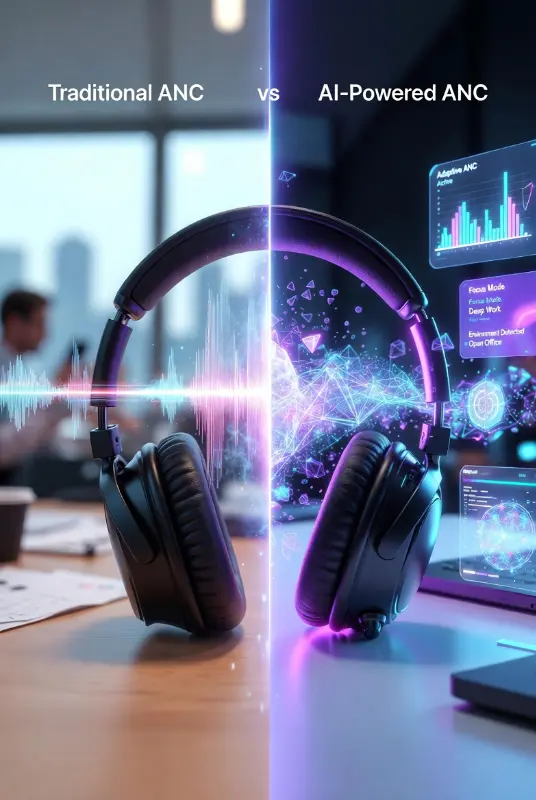
Whether you’re battling open-office chatter, coffee shop noise, crying babies on a plane or home interruptions, the right headphones can make or break your productivity. But with so many options, one question stands out: do AI-powered noise-canceling headphones really perform better than conventional ANC headphones?
The short answer? It depends on your needs. Traditional active noise cancellation (ANC) remains excellent for consistent environments, while AI-integrated models adapt intelligently to changing surroundings. In this guide, we break down the differences, real-world performance and which best noise canceling headphones deserve a spot on your desk.
What Is Active Noise Cancellation?
Active Noise Cancellation creates opposing sound waves to cancel out external sounds that are detected by microphones. Conventional ANC uses preset filters and fixed algorithms, which are very successful against predictable low-frequency noise, such as traffic or airplane engines, but less adaptable in dynamic environments. With AI-powered ANC it gets even better. It uses machine-learning processors that continuously analyze your environment, wearing style, air pressure and even audio content - noise, voices, in real time. Models like the Sony WH-1000XM6 use advanced chips like Sony’s QN3 processor to optimize noise cancellation on the fly, while Bose QuietComfort Ultra models incorporate AI-driven algorithms for smoother transitions and better handling of sudden noises.
The result? AI headphones don’t just block sound, they learn and adapt, making them ideal for unpredictable situations.
Features to Compare
Adaptive ANC
Traditional ANC offers solid, consistent performance but struggles when noise profiles that change rapidly, moving from with low background noise to higher background noise. Think switching from a quiet office space to a crowded street.
AI models shine in these situdations. Sony's Adaptive NC Optimizer and similar systems in premium headphones automatically adjust in real time, blocking low rumbles on trains or high-frequency chatter in meetings, without manual tweaks or being within predefined range of frequencies.
Smart Assistant Integration
Traditional headphones typically support basic voice assistants like Siri, Google Assistant, or Amazon Alexa for simple commands. AI-powered headphones go further by adding contextual awareness - automatically pausing for conversations, activating focus mode through calendar integration, and enabling quick replies without needing to touch your phone.
Where they truly stand out is in productivity. Features like intelligent ambient blending allow just enough external sound for collaborative work, while task-aware audio profiles can switch from deep-focus playlists to podcast-optimized EQ. Some models even detect when you begin typing or speaking and adjust settings in real time - transforming headphones into smart, adaptive productivity companions.
Battery And Design
Traditional ANC headphones typically deliver 24–30 hours of battery life with noise canceling enabled, and AI-enhanced models match or slightly exceed that range for example, the Sony WH-1000XM6 reaches up to 30 hours thanks to more efficient processors and adaptive power management that reduces intensity in quieter environments. Fast charging is strong across both categories, with many models providing 3–5 hours of playback from just a 5-minute charge. In terms of comfort and design, both prioritize lightweight builds and plush earcups for all-day wear; Bose is often regarded as a leader in pure comfort, while newer AI-focused designs add practical refinements such as improved headbands, foldable frames, and better pressure distribution for enhanced long-term usability.
Sound Quality And Conectivity
Traditional tuning delivers balanced, reliable audio, while AI-enhanced models use automatic EQ adjustments based on content type, fit, and environment to optimize the experience. Boosting bass for music or enhancing midrange clarity for calls and podcasts. In terms of connectivity, both categories offer stable Bluetooth with multipoint pairing, but AI-driven models often have the edge with faster device switching and smoother ecosystem integration, particularly within Apple devices.
Feature | Traditional ANC | AI-Powered ANC |
Adaptive Noise Handling | Fixed/preset filters | Real-time learning & optimization |
Productivity Features | Basic assistant support | Focus modes, auto-blending, task awareness |
Battery Life (ANC on) | 24–30 hours | 24–30+ hours with efficient management |
Sound Personalization | Manual EQ | Automatic AI-driven EQ |
Best For | Consistent environments | Dynamic offices, travel & hybrid work environment |
Real-World Scenarios
For working from home, traditional ANC headphones reliably block background TV or household noise, while AI-enhanced models go further by recognizing “focus time” and automatically shifting into deeper immersive modes. In open-office settings often AI’s sweet spot, sudden conversations or keyboard clatter are dynamically reduced, while ambient blending maintains social awareness without breaking concentration. During commuting and travel, both types effectively cancel airplane rumble, but AI headphones adapt more fluidly when moving from a train to an airport lounge and often include wind-noise reduction for clearer outdoor calls. In hybrid work environments, AI productivity features stand out, offering seamless switching between laptop and phone along with smart notifications that pause audio only when truly necessary.
Traditional Noise-Canceling Headphones Pros:
- Proven, reliable performance in steady environments
- Often more affordable
- Excellent pure comfort (especially Bose)
- Lower risk of processing lag
Cons:
- Less effective in rapidly changing noise
- Fewer smart productivity tools
- Manual adjustments required more often
AI-Powered Noise-Canceling Headphones Pros:
- Superior adaptability for real-world productivity
- Intelligent features that enhance focus and workflow
- Future-proof with regular firmware updates
- Often better call quality via AI beamforming
Cons:
- Slightly higher price
- Potential for minor battery trade-offs in aggressive modes
- More complex apps to learn
Top Picks for the Best Noise Canceling Headphones
Best Overall & for AI Headphones Productivity: Sony WH-1000XM6 The current king of adaptive ANC. With its powerful QN3 processor and Adaptive NC Optimizer, it delivers unmatched real-time performance. Excellent for hybrid workers who need smart features and top-tier sound.
Best for Pure Comfort & Traditional Excellence: Bose QuietComfort Ultra Headphones (2nd Gen) If all-day wear and effortless noise blocking matter most, Bose still sets the standard. The latest AI-enhanced algorithm improves sudden-noise handling while keeping the legendary plush fit.
Best for Apple Ecosystem Users: Apple AirPods Max Pro-level ANC combined with Apple Intelligence integration makes these perfect for Mac and iPhone users. Spatial Audio with head tracking adds immersion for focused listening sessions.
Best Value with Strong Adaptive Features: Anker Soundcore Space One Pro Surprisingly capable AI-adaptive ANC at a fraction of flagship prices, ideal for students or anyone testing the waters.


Comments (0)